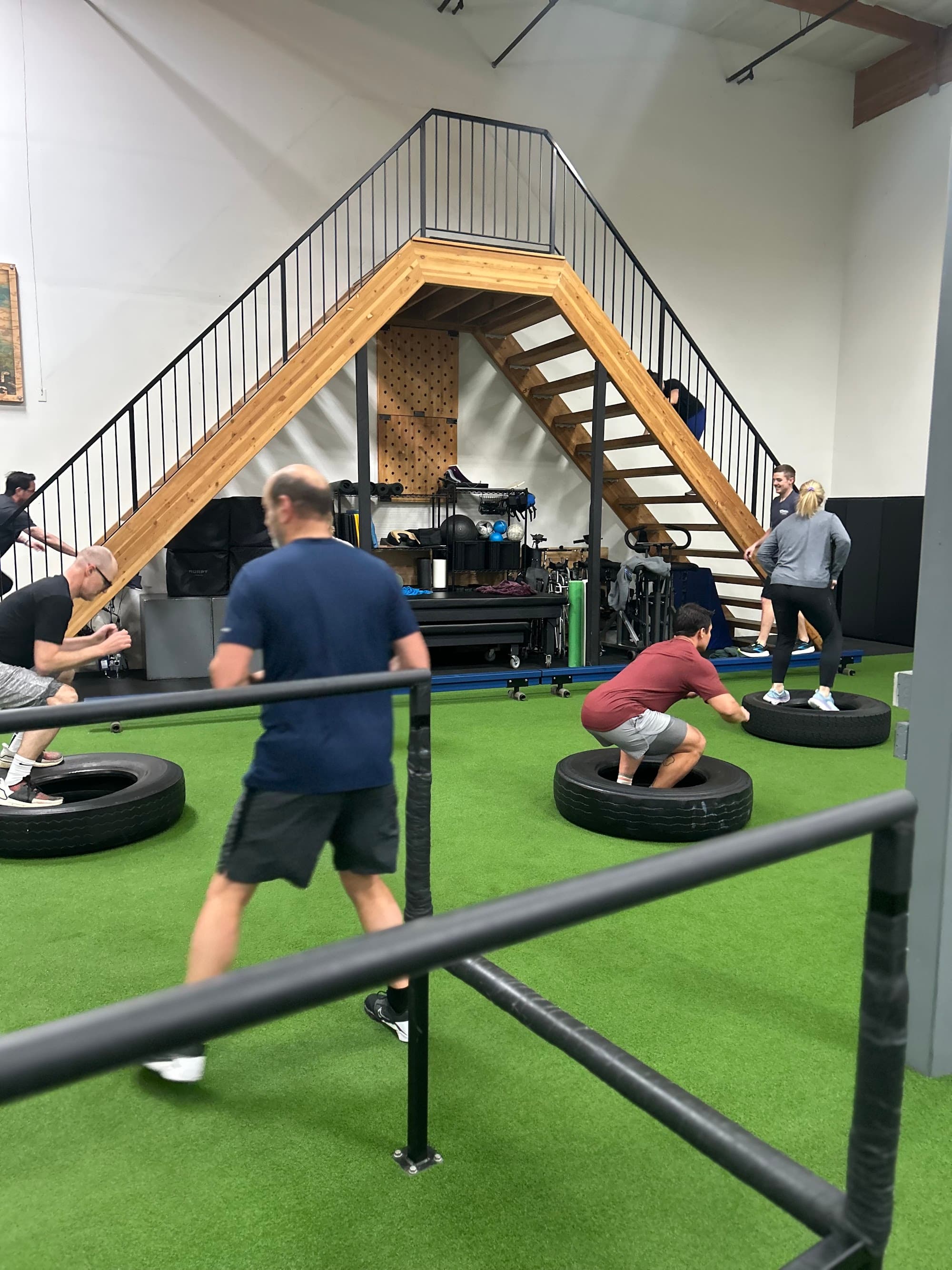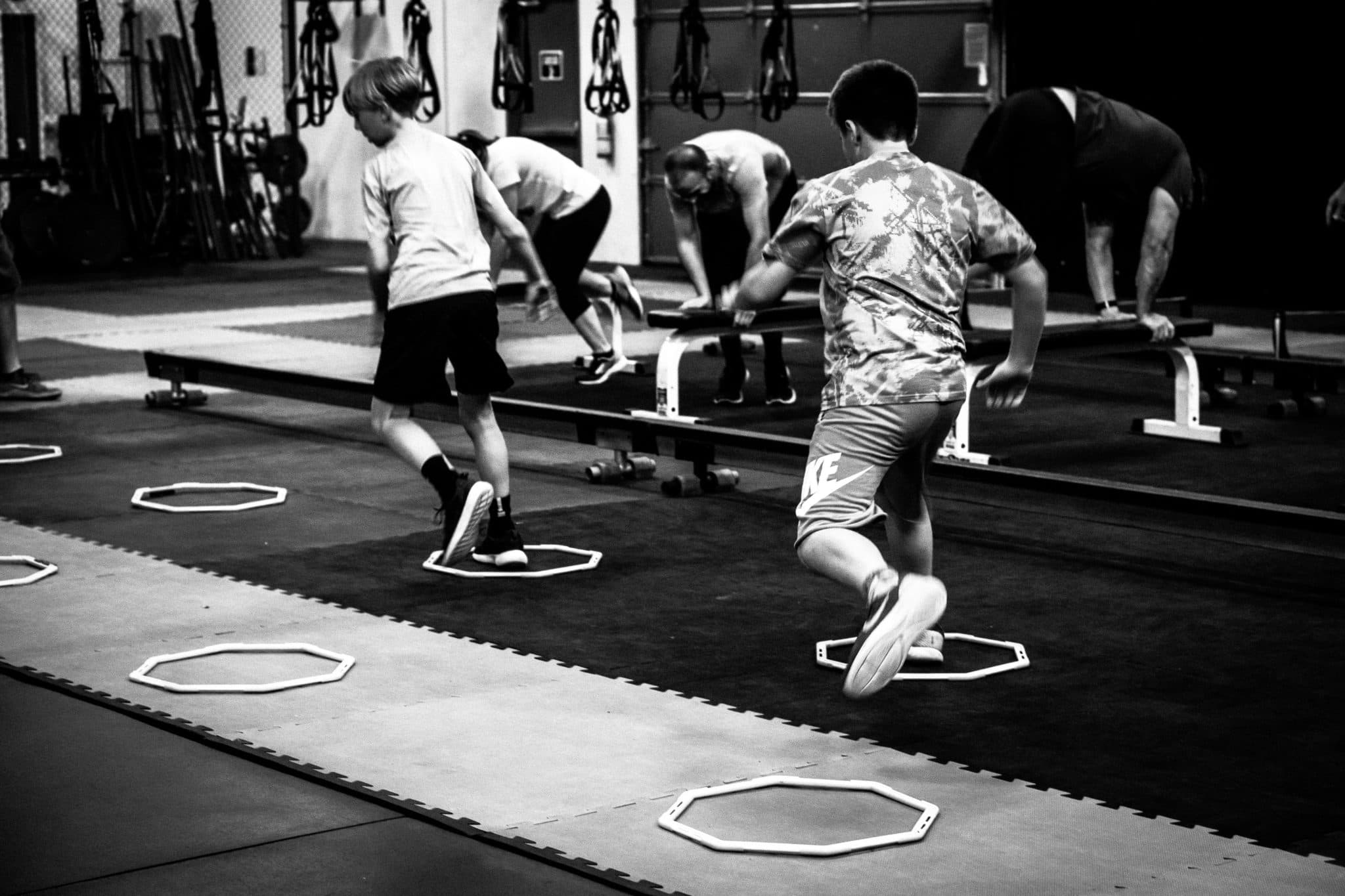
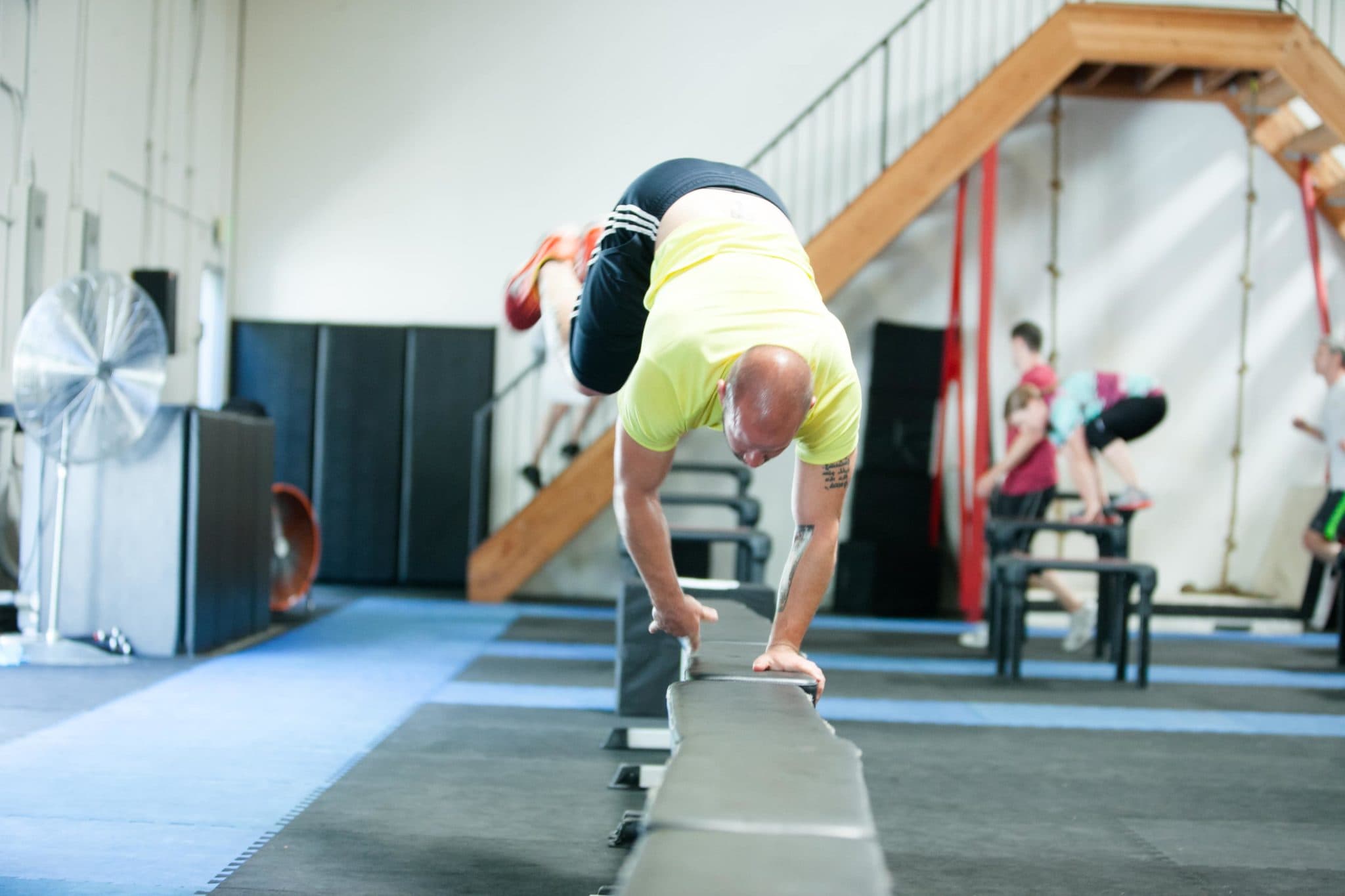
“I've been attending group fitness classes at ADAPT since 2019 and have experienced each class they offered. Since attending ADAPT, I have experienced less over-use injury and more comfort and confidence while hiking, backpacking and cycling. A big shout out to Carly, Caitlin, Jessica, Eric and Sheldon.”
One sprain shouldn't lead to ten.
The first ankle sprain usually gets dismissed: ice, wrap, walk it off. The trouble is what comes next: about 70% of athletes who skip real rehab go on to chronic instability, because the joint quits trusting itself and the body starts working around it. That pattern is findable, and it's fixable.
- Skip the rehab and re-injury is far more likely. We restore the ankle properly so it holds
- Cutting, jumping, sport-specific work, not just 'walk on it and hope'
- Direct access: get started without a referral
Is ankle sprain & instability starting to shape what you'll do and what you skip?
Lateral ankle sprains stretch or tear the anterior talofibular ligament (ATFL) and often the calcaneofibular ligament (CFL). What makes them keep happening is what changes afterward: the proprioceptors and peroneal muscles get slower, weaker, and less informative, so the brain stops trusting the joint, and a joint it doesn't trust is a joint it stops protecting. The roll happens before you can react.
What we usually hear- A.Initial sharp pain and swelling on the outside of the ankle
- B.Recurrent rolls. The ankle gives way without warning
- C.Persistent stiffness and 'thick' feeling weeks after the sprain
- D.Loss of balance on uneven surfaces, trails, or single-leg stance
- E.Apprehension cutting toward the injured side
Get a real plan for your ankle sprain & instability: free, no referral.
Sixty minutes with Courtney, our Director of Training. We'll see how you move, find what's driving it, write you a plan, and tell you the truth about what it'll take.
Specific ankle sprain & instability conditions we work with.
Our approach to ankle sprain & instability.
Acute care: protect, restore range, control swelling. Recovery phase: progressive strengthening of the peroneals, posterior tibialis, and intrinsic foot muscles, plus reactive proprioception and balance training. Sport-return phase: cutting, jumping, deceleration drills, and confidence work on the affected side.
Programs you may use
Real members.
Real progress.
“Coach Sheldon and the whole team have been excellent. Auto accident left me with whiplash and a wrecked low back. Six months in, I'm back to skiing. Honest, evidence-based, and they listen.”
“I came in after a knee replacement convinced I'd never hike again. Two years later I'm in the mountains every weekend, and back in the gym three mornings a week. ADAPT didn't fix me. They taught me how to keep getting better.”
See how your body actually moves.
Book a Game Planning Session online or text us a sentence about your goals. We'll get back within one business day.
Five reasons members come, and stay for a decade.

One system, not a handoff.
Your PT and your coach aren't running separate playbooks. They read the same intake and apply the same movement principles, so restoring better movement in the clinic and reinforcing it in training is one continuous plan, not a baton pass.
Direct access in Oregon: no referral required.
Skip the doctor's-office stop-over. Walk in, get assessed, start moving better. PT is cash-pay: only motor-vehicle-accident (PIP) insurance is billed.
Same practitioner every visit.
Continuity that compounds. Each session builds on the last because the same eyes track how your movement is changing, and consistency is what actually changes the body.
Long-arc, not quick-fix.
A few weeks of relief is fine. Decades of capability is the goal. Getting older doesn't mean giving things up. Members come in for one problem and stay for years because the system keeps progressing with them.
We read movement, not just imaging.
Imaging describes the structure. The movement assessment shows where your body is compensating and loading the wrong tissue. We work with what your body actually does, then restore it doing the right job.
Get your week back from ankle sprain & instability.
Grade-1 sprains return to sport in 1–3 weeks; grade-2 in 3–6 weeks; grade-3 (full ligament tear) may run 8–12 weeks and occasionally needs surgical consult. Chronic instability cases run 8–16 weeks of structured programming to retrain the system.
- Comprehensive assessment. Postural pictures, full movement screen, and a baseline you can measure progress against. Numbers, not vibes.
- A plan built for your body.Shaped around your goals, your imaging, and what your body actually does, not what it's supposed to do.
- Same practitioner, every visit. Continuity that compounds. The plan adjusts as your movement changes.
- Reinforced until it sticks.As the pain quiets, the same system carries into classes and small-group training so the gains don't slide back.
Talk to a person.
Two steps: name + phone, then email + your goal. We'll call back within one business day, or call us directly at (503) 755-8558.
Book your Game Planning Session.
Sixty minutes with Courtney, our Director of Training. We'll look at how you move, find what's getting in the way, and write you a plan. No referral, no commitment, no charge.
Inside Athletics.
See how your
body actually moves.
It starts with a conversation. Book a Game Planning Session: sixty minutes with a coach or PT. We'll look at how you move, find what's getting in the way, and write you a plan for what you want to keep doing. No referral, no commitment, no charge.